
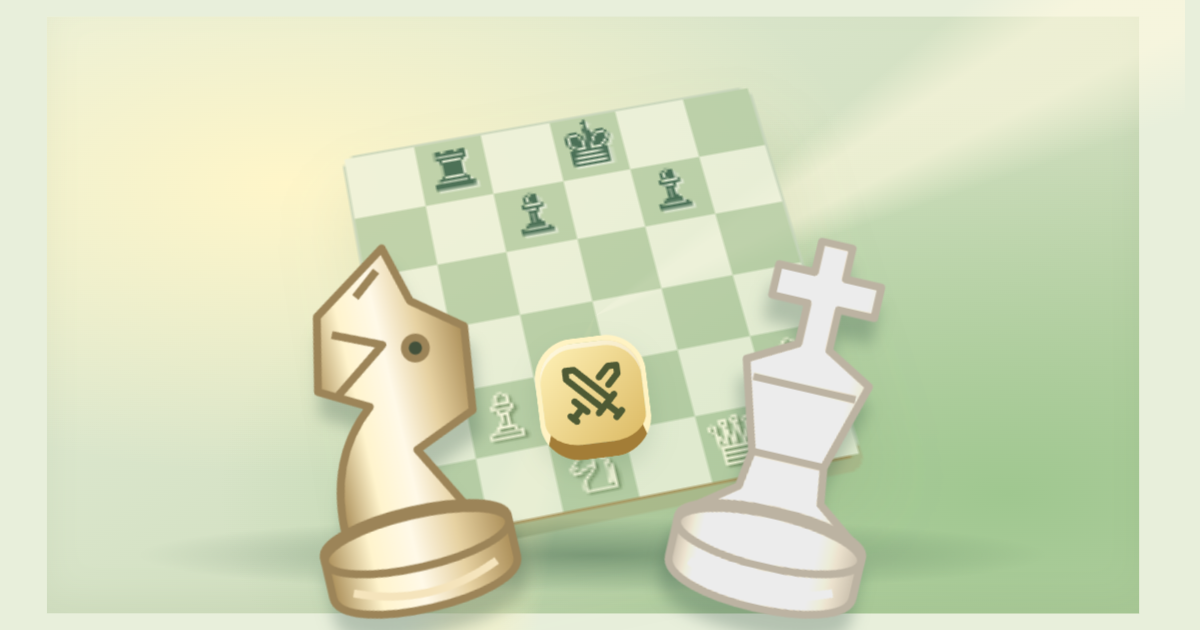
What you practise while playing
Chess makes the thinking process visible. You hold possible moves in mind, notice patterns such as forks and pins, and delay an attractive capture until you have checked its consequences. That is practice in calculation and restraint within a defined system. A difficult position is useful even when you lose: explaining why a tempting move failed can teach more about chess than winning against a much weaker opponent.
Build a simple plan
In the opening, bring knights and bishops into play, contest the centre and prepare castling. Before every move, ask what your opponent threatened and whether your chosen square is defended. In the middlegame, look for checks, captures and direct threats, then examine the opponent’s strongest reply. In an endgame, activate your king when safe and support a passed pawn instead of pushing it alone.
Mistakes to avoid
Do not bring the queen out just to attack one pawn while your other pieces remain trapped. Avoid moving the same piece repeatedly without a reason or making a capture without checking the recapture. The king is never captured: checkmate ends the game first. A side with no legal move but no check is stalemated, which is a draw rather than a win.
Try this exercise
For five moves, say out loud what every opponent move attacks before choosing your response. After the game, find one unprotected piece you overlooked and one move that improved several pieces at once. Replay that position with a friend; compare plans, not just who won.
A better practice routine
Choose one theme per session: king safety, undefended pieces or using all your pieces. Play a game, note one turning point and try again with the same theme. Do not judge progress from a single result. A friendly rematch is a good way to test a different opening and discuss the decision that changed the game. Take a break when calculation becomes rushed.
What research can and cannot say
These games involve attention, remembering rules, comparing options and responding to an opponent. Becoming better at a game demonstrates learning within that game; it does not establish an increase in general intelligence. Research on chess instruction and transfer to unrelated school skills has mixed or null findings in rigorous trials. We do not claim that playing creates brain cells, treats a condition or guarantees higher IQ. The exercises here are practice suggestions, not measured clinical outcomes. Study a decision, not only its result. Before playing, compare two legal options, predict the opponent’s strongest reply and state what would make your plan fail. After the game, revisit that position and separate a calculation error from an uncertain outcome. In games with dice, a good decision can still have an unlucky result. Track recurring mistakes across several games instead of treating one win as proof of progress. This is a practical way to study strategy; it does not establish a general increase in intelligence.
Challenge a friend
Open the game you want to play and use Invite or the share icon. For Parchisi or Monopoly, select the number of seats and Friends first. Send the invitation, copy it or let your friend scan its QR code. Your friend enters with a separate profile. The invitation has a ten-minute countdown; if it expires, return home and create a new one. Use the start or fill option where the waiting room offers it.
Common questions
Can I invite a friend?
Open the game you want to play and use Invite or the share icon. For Parchisi or Monopoly, select the number of seats and Friends first. Send the invitation, copy it or let your friend scan its QR code. Your friend enters with a separate profile. The invitation has a ten-minute countdown; if it expires, return home and create a new one. Use the start or fill option where the waiting room offers it.
Can I change my account name?
To try the platform without a password, choose Continue as guest and enter your name before joining. A registered account reserves its nickname: the profile editor does not currently rename it. You can choose a name when creating an account or upgrading a guest account. Check spelling before confirming; changing your sticker or flag does not rename your account.
Are platform coins real money?
The final podium awards 100k platform coins for first, 50k for second and 10k for third. These coins track progression; they are not cash prizes. Monopoly money belongs only to the current board and is separate from your account coins. Keep the tournament page open between rounds, review the next match card and wait for the server’s result before leaving.