
Understand the objective
Chess is a conversation of threats and answers on 64 squares. Your goal is checkmate, not collecting the most pieces. Learn the six piece movements first, then practise making safe moves that develop your army and protect your king.
How to play
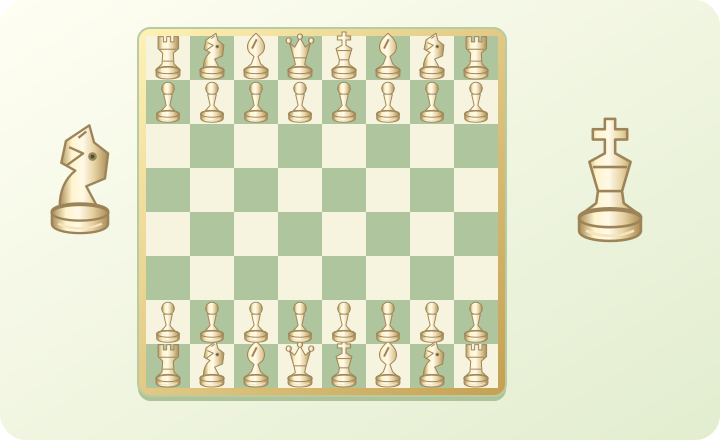
Set the board with a light square at the near-right corner. Each side has eight pawns on the second rank; behind them stand rook, knight, bishop, queen, king, bishop, knight and rook. The queen starts on her own colour. White moves first. Select a piece, inspect its legal destinations and choose a square; touch and long-press dragging are supported. Capture by moving onto an opposing piece, but never move onto your own piece or leave your king attacked.
Rules used on this platform
- White moves first. Select a piece, then an available square.
- Win by checkmate. You cannot make a move that leaves your king in check.
- Castling, en passant and promotion choices are supported.
- Automatic draws include stalemate, insufficient material, fivefold repetition and the 75-move rule. Threefold and 50-move draw claims are unavailable.
Meet the six chess pieces
King
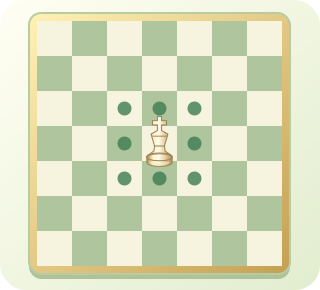
One square in any direction. Never enter an attacked square; kings cannot stand next to each other.
Queen
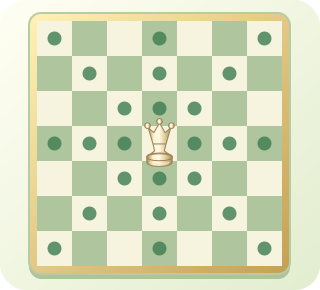
Any number of clear squares along a rank, file or diagonal. Powerful, but still vulnerable to attacks.
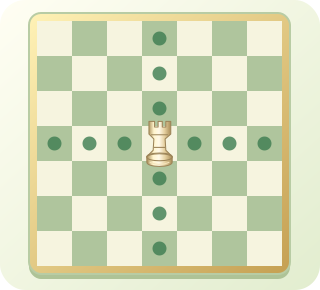
Rook
Any number of clear squares horizontally or vertically. Two rooks begin on the corners.
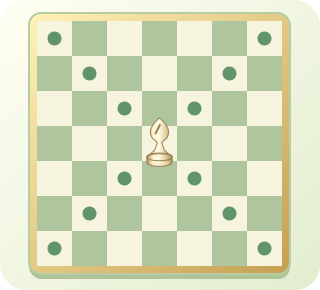
Bishop
Any number of clear squares diagonally. A bishop stays on its starting square colour throughout the game.
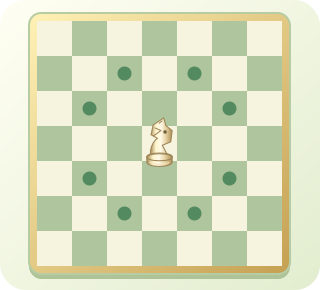
Knight
An L: two squares in one direction and one to the side. The only piece that can jump over others.
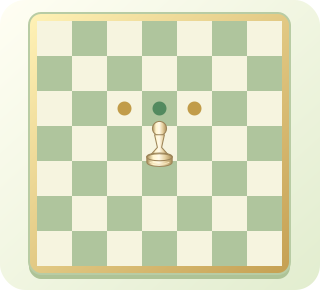
Pawn
Moves one square forward into emptiness; may move two from its starting square if both are clear. Captures one square diagonally forward. It cannot move backwards.
Check, mate and special moves
Check means your king is attacked. Escape by moving the king, capturing the attacker or blocking the line when possible. Checkmate means none works; the game ends. Stalemate is no legal move without check and gives a draw.
Castling moves the king two squares toward a rook and brings that rook beside it. Neither may have moved, the intervening squares must be empty, and the king must not start in, pass through or end in check.
A pawn reaching the final rank becomes a queen, rook, bishop or knight of your choice. En passant is a special pawn capture immediately after an adjacent enemy pawn advances two squares: capture as if it had moved one. The chance disappears after another move.
Build a simple plan
In the opening, bring knights and bishops into play, contest the centre and prepare castling. Before every move, ask what your opponent threatened and whether your chosen square is defended. In the middlegame, look for checks, captures and direct threats, then examine the opponent’s strongest reply. In an endgame, activate your king when safe and support a passed pawn instead of pushing it alone.
Mistakes to avoid
Do not bring the queen out just to attack one pawn while your other pieces remain trapped. Avoid moving the same piece repeatedly without a reason or making a capture without checking the recapture. The king is never captured: checkmate ends the game first. A side with no legal move but no check is stalemated, which is a draw rather than a win.
Try this exercise
For five moves, say out loud what every opponent move attacks before choosing your response. After the game, find one unprotected piece you overlooked and one move that improved several pieces at once. Replay that position with a friend; compare plans, not just who won.
Play with your own profile
Open the profile button at the top of a game and choose Create account. Pick an available nickname of 2–20 letters or numbers, with spaces, dots or hyphens. Enter a private password of 10–128 characters and confirm it. Sign in on another device with the same credentials to recover your saved profile and coins. Never send your password in chat.
To try the platform without a password, choose Continue as guest and enter your name before joining. A registered account reserves its nickname: the profile editor does not currently rename it. You can choose a name when creating an account or upgrading a guest account. Check spelling before confirming; changing your sticker or flag does not rename your account.
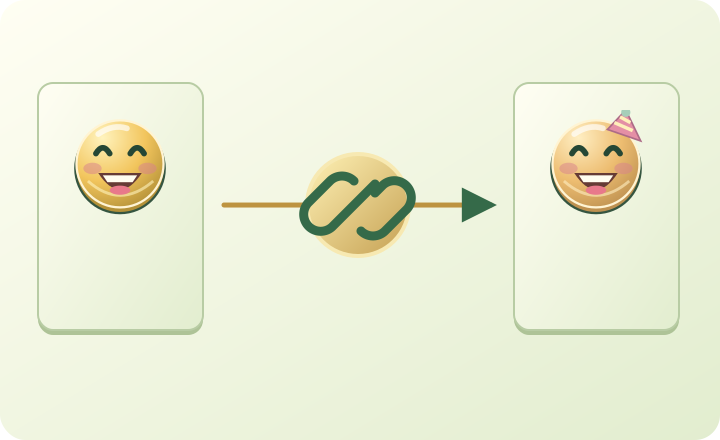
Open your profile, browse the circular stickers and select the face that suits you. The list scrolls inside the window. Choose a country flag, or the globe option for no flag, then save. Your selected sticker appears beside your name in games and chat; in Parchisi and Monopoly it also represents your moving pawn. Signed-in profile choices are saved to your account.
The chat icon opens the conversation without leaving the game. Each message identifies its sender by nickname and sticker. The microphone button controls what you transmit; the listening button independently mutes or restores other players. A friend can hear you without opening their own microphone, provided listening is enabled. Allow microphone access when asked. Focus mode enlarges the board; closing the chat returns you to it.
Account & stickersChallenge a friend
Open the game you want to play and use Invite or the share icon. For Parchisi or Monopoly, select the number of seats and Friends first. Send the invitation, copy it or let your friend scan its QR code. Your friend enters with a separate profile. The invitation has a ten-minute countdown; if it expires, return home and create a new one. Use the start or fill option where the waiting room offers it.
Organise a tournament
From Tournaments on the homepage, create a cup, choose the game and select 4, 8 or 16 entrants. Choose an open event for random participation, or Friends to share invitations. The organiser controls the friend cup start. Empty places may be filled by platform-controlled opponents; a displayed profile does not establish that a person is online. Read the waiting-room countdown and entry settings before starting.
The current format is knockout with a bronze match. Follow the match cards to see the two opponents and who qualifies. Tournament matches are head-to-head, including the multiplayer games; a four-player Parchisi room is different from a four-entrant tournament. Each decision has a 120-second clock. A drawn match is replayed with reversed sides; after two draws the original seeded order decides qualification.
The final podium awards 100k platform coins for first, 50k for second and 10k for third. These coins track progression; they are not cash prizes. Monopoly money belongs only to the current board and is separate from your account coins. Keep the tournament page open between rounds, review the next match card and wait for the server’s result before leaving.
Organise a tournamentCommon questions
Can I invite a friend?
Open the game you want to play and use Invite or the share icon. For Parchisi or Monopoly, select the number of seats and Friends first. Send the invitation, copy it or let your friend scan its QR code. Your friend enters with a separate profile. The invitation has a ten-minute countdown; if it expires, return home and create a new one. Use the start or fill option where the waiting room offers it.
Can I change my account name?
To try the platform without a password, choose Continue as guest and enter your name before joining. A registered account reserves its nickname: the profile editor does not currently rename it. You can choose a name when creating an account or upgrading a guest account. Check spelling before confirming; changing your sticker or flag does not rename your account.
Are platform coins real money?
The final podium awards 100k platform coins for first, 50k for second and 10k for third. These coins track progression; they are not cash prizes. Monopoly money belongs only to the current board and is separate from your account coins. Keep the tournament page open between rounds, review the next match card and wait for the server’s result before leaving.